
2026-10-10 · Michael 'Mike' Chen
How Tree Roots Affect Sewer Lines in Frankford Row Homes
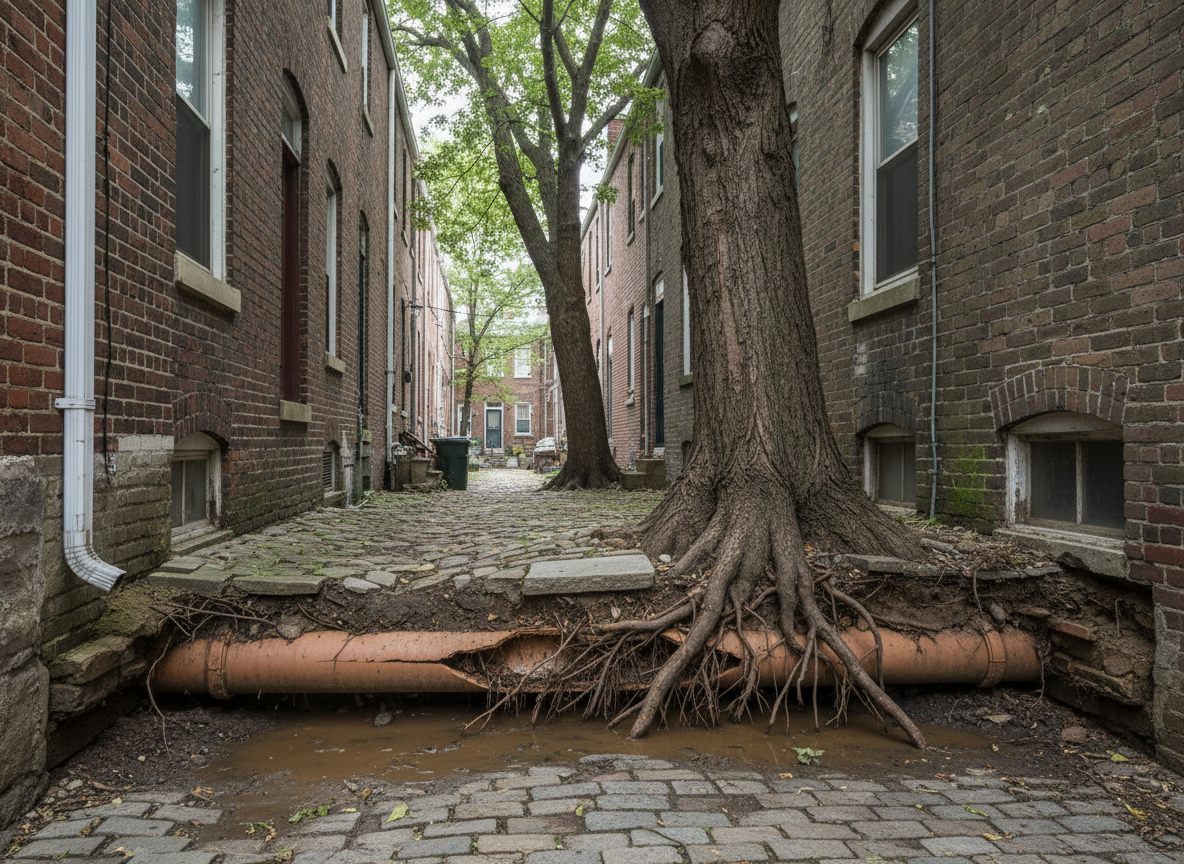
Tree roots are a leading cause of sewer line blockages and damage in Frankford's older row homes, with invasive roots typically entering pipes through tiny cracks and joints, growing to completely obstruct flow within 1 to 5 years if left unchecked. The dense, mature tree canopy common in neighborhoods like Frankford, Wissinoming, and Bridesburg, combined with the aging infrastructure of many properties built in the early to mid-20th century, creates ideal conditions for root intrusion. These roots, constantly seeking moisture and nutrients, are naturally drawn to the water vapor escaping from even the smallest imperfections in your home's sewer pipes, eventually forcing their way inside and creating significant plumbing headaches.
Why Frankford's Row Homes Are Particularly Vulnerable
The distinctive architecture and urban planning of Frankford, a cornerstone of Philadelphia 19124, contribute significantly to its susceptibility to root-related sewer issues. Many of these charming row homes, particularly those constructed before the 1970s, feature original sewer lines made from materials like cast iron or clay (terra cotta). These materials, while durable for their time, are prone to developing hairline cracks, misaligned joints, or even suffering from minor shifts in the ground over decades. Unlike modern PVC pipes, which offer seamless connections, older clay and cast iron pipes provide numerous entry points for tenacious tree roots.
Furthermore, the proximity of street trees and mature yard trees to these homes is a critical factor. In a densely populated area like Frankford, every inch of green space is valuable, and trees are often planted relatively close to property lines and utility easements. As these trees mature, their root systems expand extensively, sometimes reaching 2 to 3 times the width of the tree's canopy. This widespread root network inevitably intersects with underground sewer lines, creating a constant threat of intrusion. The combination of aging pipe materials and pervasive root systems creates a perfect storm for recurring drain issues in these historic Philadelphia neighborhoods.
How Tree Roots Invade Sewer Lines
The process of root intrusion is insidious and often goes unnoticed until a significant blockage occurs. It begins with the tree's feeder roots, which are hair-thin and incredibly sensitive to moisture. Even a minute crack in a sewer pipe, perhaps from ground settlement or a slight shift, will emit water vapor. This vapor acts as a beacon for nearby roots, drawing them towards the pipe. Once they reach the crack, these tiny roots exploit the opening, growing into the pipe's interior. Inside the pipe, they find a constant supply of water, nutrients, and oxygen – an ideal environment for rapid growth.
Initially, these roots might not cause much disruption, but as they thicken and branch out, they begin to trap solid waste, grease, and other debris flowing through the sewer. This accumulation gradually narrows the pipe's diameter, impeding flow and leading to slow drains and eventually complete blockages. Over time, the expanding root mass can exert significant pressure on the pipe walls, leading to further cracking, joint separation, or even pipe collapse. This progression from a small crack to a major obstruction can occur surprisingly quickly, often within a year or two once roots have gained a foothold.
Common Signs of Root Intrusion in Your Frankford Home
Recognizing the early warning signs of root intrusion can save Frankford homeowners from costly and disruptive sewer line emergencies. Being attentive to these indicators can prompt timely intervention before a minor issue escalates into a complete sewer backup. Here are the most common signs to watch for:
- Slow Drains: If multiple fixtures in your home, such as sinks, showers, and toilets, are draining sluggishly, it's a strong indicator of a blockage in the main sewer line, which is often caused by roots. This is distinct from a single slow drain, which might point to a localized clog.
- Gurgling Toilets or Drains: Unusual gurgling sounds coming from your toilet after flushing, or from drains when water is running elsewhere, suggest that air is being trapped by an obstruction in the sewer line, struggling to pass through.
- Foul Odors: A persistent sewer gas smell emanating from drains, particularly in your basement or near your main cleanout, can indicate a compromised sewer line where roots have created openings, allowing gases to escape.